What is the correct spelling of your village’s name?Nobody can tell you.
Start here
One village. Three ways of writing it.
Bhamabaddi, in Sangrur tehsil. Every register agrees it is village 039778 with 1,076 people. Not one of them agrees on the name. Line the three Gurmukhi forms up letter by letter and the whole disagreement is two cells.
12345678the land recordjamabandi.punjab.gov.inਭੱਮਾਬੱਦੀPunjabi Wikipediapa.wikipedia.orgਭੰਮਾਬੱਦੀthe village signphotographed 2 Septਭ—ਮਾਬੰਦੀ
Slot 2 — before ਮ, a nasal
bhammā = bhammā
Both marks double the ਮ. The same spoken word, written two ways. Somebody who has said this name their whole life cannot hear the difference — so it is not a question to ask them.
Slot 6 — before ਦ, not a nasal
baddī ≠ bandī
The same two marks now give different words. Anyone who lives there settles this one in four seconds.
Two of those were written by the same government. The land record and the road sign are thirty seconds apart on the same road.
Check it yourself
Two government records, two different jobs
The land recordPunjab’s Jamabandi register, kept by the Revenue Department, carries the village name in Gurmukhi — the only government source anywhere that writes it in its own script. Pick a district and tehsil and you can read the name exactly as the state holds it. jamabandi.punjab.gov.in
The censusThe Census of India 2011 gives a village its stable code, its population and its place inside a district — but writes every name in Roman letters. It can tell you which village. It cannot tell you how the name is spelt. censusindia.gov.in
The census writes Roman everywhere, not just here. We looked up a village in five states with five different scripts — Kerala, West Bengal, Tamil Nadu, Andhra Pradesh, Gujarat — and every name came back in Roman. The site offers English and Hindi, and no regional script at all. So this is not something Punjab was left out of: the census has no field for a place name in its own script anywhere in India. That is why the land record is the only place the Gurmukhi survives — and why, when it is wrong, there is nothing to check it against.
Why nobody has fixed it
There is no authority to appeal to.
A standardised place name, in the United Nations’ own definition, is one sanctioned by a names authority. India has none for Punjabi place names. The Language Department promotes the language. Punjabi University studies it. The Revenue Department issues notifications but holds no view on spelling. The Survey of India rules on romanisation only, and leaves the Gurmukhi to the state.
A second village
ਦੁੱਗਾਂ
Duggan, Sangrur tehsil. Hadbast 67, 5,422 people. It is the village this project comes from — and it has the opposite problem to its neighbour.
And this one is not settled. The census spelling suggests a nasal the land record lost, but a Roman n is not proof on its own — the same register writes ਭਿੰਡਰਾ as “Bhindran” with no nasal in the Gurmukhi either. It needs evidence from the village. We record the disagreement. We do not close it.
The headline figure
0of 13,004 villages whose Gurmukhi name has been standardised by anybody
That field stays empty until a government notification fills it. The emptiness is the finding — not a gap in our data.
What we are building
Three kinds of witness, side by side
Records
What the state writes — the land record and the census. They disagree with each other, and sometimes with themselves.
Signs
What is painted on the board at the edge of the village. Proof of what a sign says on a date, never proof of the name.
People
What residents write and say. A column beside the others — listed, never counted into a winner.
Every village gets a page showing all three, aligned so you can see exactly where they part company — even if you cannot read Gurmukhi.
What we will never do
Three refusals
Never correctWe show every form with its source and its date. We do not publish a right answer, because nobody is empowered to give one.
Never verifyPunjab keeps no register of panchayat seal impressions and no public roster of sarpanches. A document somebody sends us is reviewed — a person has looked at it — and never verified.
Never petitionIf a village wants its name corrected, the village files its own resolution, to an office that can check its own register. We supply the evidence and are credited as its source.
Where it stands
Honestly, at the beginning
13,004revenue villages in Punjab
0with a standardised Gurmukhi name
0rows collected. Nothing is built yet
The design is written down — eighteen documents, checked against primary sources. The archive itself does not exist. We are saying what we intend to do before doing it, so that people can tell us if it is wrong.
Dedication
ਮਹਿੰਦਰ ਸਿੰਘ
Mahinder Singh
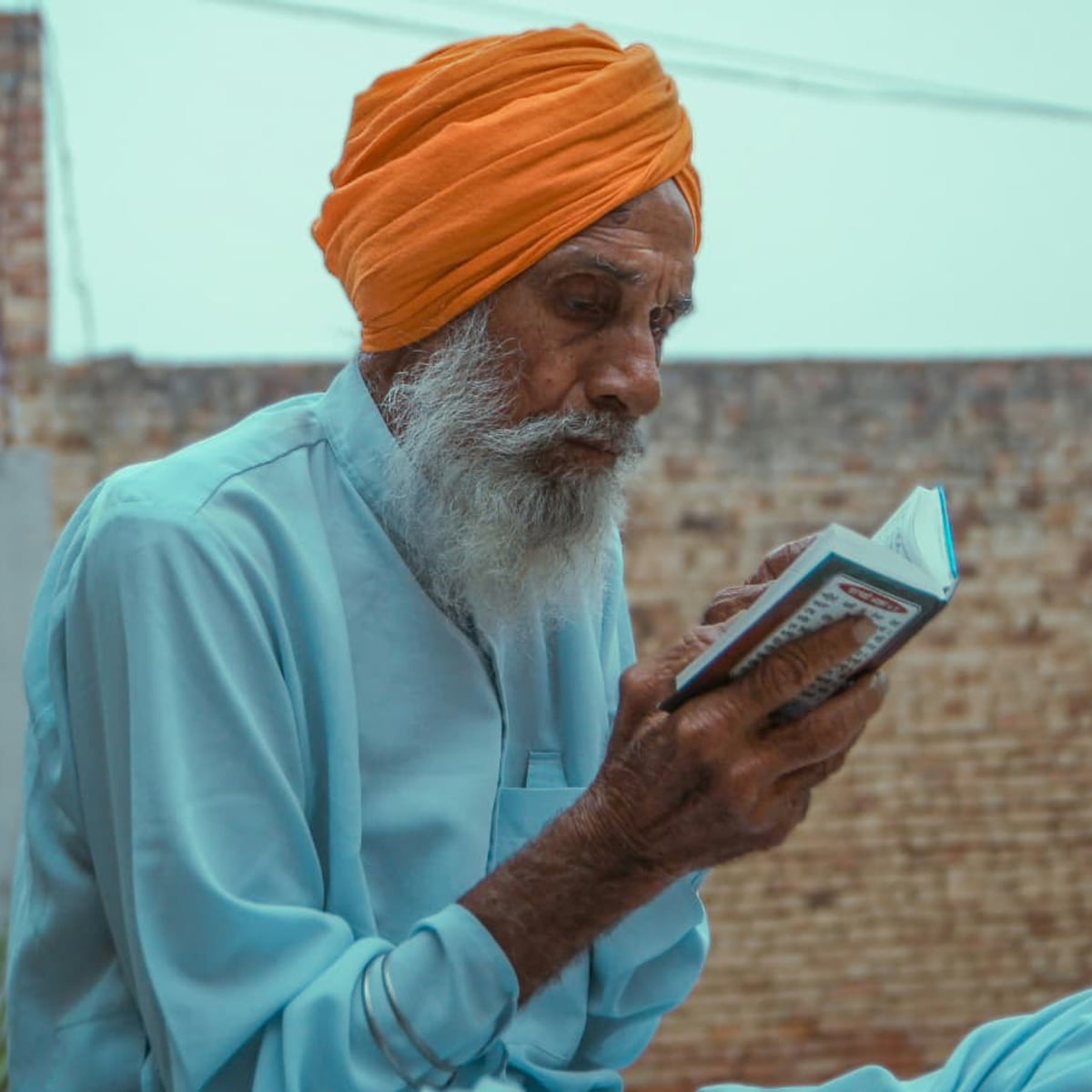
This project is for my grandfather, and it is his more than mine.
He knows how our village’s name is said. Somewhere between his saying it and a clerk writing it down, the two stopped matching — and nobody ever thought to ask him.
This is the asking.
Before we go further
Tell us if this is wrong
We would rather hear it now than after we build it
Is your village’s name written wrongly somewhere? Do you know how a name was settled, or who decides? Is there something here we have misunderstood — about the records, the language, or how any of this actually works in a village?